www.Lookscar.blogspot.com

The Volkswagen Jetta’s long-awaited changeover from the current inline-five-cylinder engine to a turbo four will happen in 2013 for the 2014 model year, the company’s U.S. product czar Rainer Michel told us this week. Soon after, Michel says, the engine will land in a 2014.5 model-year Passat. This confirms the timing we heard earlier from a different—and has-to-stay-nameless—source.

www.Lookscar.blogspot.com

The BMW 328i Luxury's logbook had finally cooled down after a disappointing trip to the local road course when something else happened: the weather heated up. Between surviving one choice mishap and dealing with sweltering temperatures, our BMW has had a rough month.

www.Lookscar.blogspot.com

Vorsteiner has created a new aero package for the already gorgeous 458. This includes a front spoiler, side skirts and a revised rear diffuser. This is combined with specialised 21 inch rims. All parts are made out of carbon fibre.

www.Lookscar.blogspot.com

Spanish specialty carmaker Aspid Cars has dropped the primary teaser pictures of its new GT-21 Invictus, a 2+2 seater sports automotive. this is often Aspid's second vehicle series when the hardcore Super Sports (SS), which sort of resembles a Lotus seven on steroids.

www.Lookscar.blogspot.com

The version of the ATS that Cadillac meant to spice up the company’s overall fuel-economy numbers has simply received a rather lackluster rating from the EPA. With a Two hundred-hp, 2.5-liter four-cylinder engine, the ATS is rated at simply twenty two town mpg and thirty three highway.

Monday, August 6, 2012

Ford Taurus 2.0L EcoBoost 2013 First Drive


Big car, small engine. The pairing may seem paradoxical, but Ford has made a habit of dropping its turbocharged, direct-injection 2.0-liter four-cylinder into its larger vehicles. The latest blue-oval big’un to get a small EcoBoost is the beefy Taurus; this additional engine option, joining a naturally aspirated V-6 and the SHO’s EcoBoost V-6, appears as part of the sedan’s 2013 refresh. As for its other big/small combos, Ford already has ladled the 2.0-liter into the Explorer and the Edge with mixed results. 

Pay More for Less
We’ve found that Ford’s 240-hp EcoBoost four does an admirable job of motivating the Edge and redesigned-for-2013 Escape crossovers, but is overburdened in the Explorer. The engine is the 2013 Fusion’s top-of-the-line motivator, and a higher-output version powers the new Focus ST. Regardless of which hood the 2.0-liter lives under, the engine is well-mannered and smooth, with linear power delivery and little turbo lag. 


The turbo four is paired exclusively with a six-speed automatic driving the front wheels and is available in any Taurus trim except the sporty, range-topping SHO model. As with the Edge and Explorer, the 2.0-liter EcoBoost four in the Taurus is a step-up, extra-cost engine. The promised return for its $995 price is improved fuel economy relative to the base V-6 engine—both the city and highway EPA ratings are three better here, landing at 22/32 mpg. In our experience, it’s tougher to get close to EPA mileage estimates in turbocharged cars, so we’ll reserve final judgment until we can fully test this model. 

Beefy Tostadas Can Accelerate, Too
Of all the big Fords to get the 2.0-liter EcoBoost four, we think the 2013 Taurus may be the most appropriate. It’s mostly a question of mass. The Taurus weighs a little less than an Edge when both are equipped with the engine. A 2.0-liter Explorer, on the other hand, weighs a good quarter-ton more than an Edge so equipped, tapping out the powertrain. Although down 48 hp on the Taurus’s base 3.5-liter V-6, the turbo four produces 16 additional lb-ft of torque, and its twist is available at a lower rpm. As a result, the 2.0-liter Taurus gets up and goes much like the front-wheel-drive V-6 sedan. The only indication that two cylinders are missing comes in the form of a faint resonance that enters the cabin at low revs in higher gears.
As befits its fuel-sipping mission, the four-cylinder Taurus’s six-speed automatic transmission dutifully grabs the highest possible gear as quickly as it can. There is a “sport” transmission mode, which delays upshifts until the tach needle swings closer to redline, but it seems uncouth to drive a non-SHO Taurus this way. A fidgety shift-lever-mounted rocker switch allows drivers to summon an up- or downshift at their leisure. Unfortunately, no matter how furiously you twiddle this switch, the transmission takes a good two-count to execute on the command. 


Dynamically, the four-pot car feels nearly the same as any other Taurus. Ford says the 2.0-liter-equipped version is roughly 55 pounds lighter than a comparable V-6 model; four-cylinder cars get slightly different front spring rates along with minor changes to the dampers to account for the lighter load. You don’t feel the weight difference, and the thing still feels heavy because it is. At least the squishy suspension isolates passengers from all but the worst road imperfections. The electrically assisted steering is devoid of road feel, weighting up only off-center. An added bonus for all 2013 Taurus models is an upgraded brake master cylinder, which has firmed up pedal feel and reduced its travel.  

VEHICLE TYPE: front-engine, front-wheel-drive, 5-passenger, 4-door sedan
BASE PRICE: $28,390
ENGINE TYPE: turbocharged and intercooled DOHC 16-valve inline-4, aluminum block and head, direct fuel injection
Displacement: 122 cu in, 1999 cc
Power: 240 hp @ 5500 rpm
Torque: 270 lb-ft @ 3000 rpm
TRANSMISSION: 6-speed automatic with manual shifting mode
DIMENSIONS:
Wheelbase: 112.9 in
Length: 202.9 in
Width: 76.2 in Height: 60.7 in
Curb weight (C/D est): 4100 lb
PERFORMANCE (C/D EST):
Zero to 60 mph: 7.0 sec
Standing ¼-mile: 15.4 sec
Top speed: 112 mph
FUEL ECONOMY:
EPA city/highway driving: 22/32 mpg

Sunday, August 5, 2012

2013 Chevrolet Camaro SS 1LE: 1 Less Excuse to Not Buy a Camaro


There are some things about the ’80s that aren’t worthy of nostalgia. The era’s pony cars, by and large, fall under this umbrella. It’s true that Ford has the five-point-oh—a designation fairly soaked in Aqua Net, yet perhaps the only thing about the decade’s Stangs worth revisiting—but when it named its latest track-oriented model, it resurrected “Boss”. First appearing in 1969, Boss is cool, it’s a little intimidating, and it’s also Bruce Springsteen’s nickname. It sounds bad-ass. Chevrolet’s 1LE? For the 17 people who were paying attention in 1988, it conjures memories of an option bundle that only made that year’s Camaro less bad. To the rest of us, it sounds like three randomly selected characters. 


While it still seems as though the designation was plucked from an alphanumeric bingo bucket, 1LE has new significance for 2013 as an option package for manual-transmission Camaro SS models. It brings a host of upgrades either ported from or inspired by the mighty ZL1. The pieces that make the most difference fall into the latter category, however, including the front anti-roll-bar mounting setup, 10x20-inch front wheels and 11x20-inch rears, and beefier half-shafts. The gear pilfered directly from the ZL1 includes wheel bearings, toe links, rear shock mounts, the fuel pump, the flat-bottom steering wheel, the short-throw six-speed manual and its transmission cooler, and 285/35-20 Goodyear Eagle Supercar G: 2 tires all around (the ZL1 gets 305/35-20 rubber at the rear). The beefy wheel/tire combo actually saves a total of 22 pounds of unsprung weight. 

The 1LE package also comes with a shorter final-drive ratio of 3.91:1 versus the 3.45:1 rear end in the SS, and adds monotube rear dampers—instead of the SS’s twin-tubes—and a strut-tower brace. As for externals, Chevy engineers tell us that while the 1LE’s splitter increases downforce in the front, the wider wheels generate enough lift to bring the 1LE right back in line with the SS. Out back, the SS’s lip spoiler carries over to 1LE cars.


VEHICLE TYPE: front-engine, rear-wheel-drive, 4-passenger, 2-door coupe
BASE PRICE: $37,305
ENGINE TYPE: pushrod 16-valve V-8, aluminum block and heads, port fuel injection
Displacement: 376 cu in, 6162 cc
Power: 426 hp @ 5900 rpm
Torque: 420 lb-ft @ 4600 rpm
TRANSMISSION: 6-speed manual
DIMENSIONS:
Wheelbase: 112.3 in
Length: 190.4 in
Width: 75.5 in Height: 54.2 in
Curb weight (C/D est): 3900 lb
PERFORMANCE (C/D EST):
Zero to 60 mph: 4.6 sec
Zero to 100 mph: 10.5 sec
Standing 1/4-mile: 13.0 sec
Top speed: 157 mph
FUEL ECONOMY:
EPA city/highway driving: 16/24 mpg

2013 C-Max Hybrid to Start at $25,995


Ford has priced the C-Max Energi plug-in hybrid at $33,745, slightly higher than the least-expensive Toyota Prius plug-in. The C-Max is eligible for a $3750 federal tax credit, which brings its overall cost just below the $30,000 mark. Three option packages are available for between $1195 and $2495, and include goodies like navigation and a Sony audio system, a power liftgate and a backup camera, and active parking assist. The Energi plug-in’s electric-only range is 20 miles, or about half of Chevy’s 38-mile claim for the Volt, which costs $32,495 after a federal tax break of up to $7500. To the Ford’s credit, you get more space for your stuff and a fifth seat.

It has been a while since we last heard any news regarding Ford’s upcoming C-Max twins—hybrid and plug-in Energi—but today the silence was broken. Ford has announced the C-Max hybrid will start at $25,995 when it goes on sale in the fall. (The company has not disclosed how much it will charge to deliver the C-Max to a dealer near you.) Ford is quick to point out that the C-Max’s price undercuts that of Toyota’s similarly sized Prius V tall hatchback/small van thing by $550. (Again, not including applicable destination charges.) The C-Max Energi plug-in hybrid will arrive towards the end of 2012 and its price tag hasn’t been revealed.

As you can probably tell, Ford is sizing up Toyota’s Prius V as the C-Max hybrid’s key competitor, with the V and the plug-in version of the regular Prius falling into the C-Max Energi’s sights. Ford also took the opportunity to hype the C-Max hybrid’s Toyota Prius V–beating efficiency, although the company did not provide any numbers for comparison; the Prius V is EPA rated for 44 mpg in the city and 40 mpg on the highway. Ford claims that the C-Max Energi will better the Prius plug-in’s 95 MPGe electric-mode fuel economy, as well as that car’s total driving range.

The C-Max hybrid will go on sale nationwide this fall, but the C-Max Energi will initially be available only in select markets. Ford will ship the Energi only to its electric vehicle–certified dealers—the same ones trained up on the Focus Electric. That means the same 19 markets where the Focus Electric is currently available will also get the C-Max Energi. The Energi’s limited distribution pattern makes sense, as it’s built on the same line as the Focus Electric. Expect more details on both C-Maxes in the coming months. Tags:  | 

Arrinera Redesigns and Renames its Supercar to the Very Pagani-like Sounding Hussarya


Polish startup Arrinera just can’t seem to make up its mind about its first production model that has been in the development stages since 2008.

The company that started out as Veno Automotive before changing its name to Arrinera has presented several iterations of its V8-powered supercar model over the years, with the styling of the first sketches and prototypes being reminiscent of the Lamborghini Reventon.

Today we received pictures of the latest redesign and the announcement that the car will be named Hussarya. The news comes not too long after it was announced that famed British car designer Lee Noble became a member of the board, as well as a shareholder for Arrinera Automotive S.A.


As much as Arrinera would like to convince us that the nameplate is purely derived from Poland's Hussar cavalry of the 16th to 18th century, we have few doubts in our mind that many readers will automatically make an association with the Pagani Huayra.

Fresh nameplate aside, the Hussarya features a revamped exterior and interior design, though we only get to see the outside of the car for now.

Compared to the previous A.H.1 prototype, the Hussarya ditches the scissor doors and gains conventional doors, a newly designed front bumper with different air inlets, revised side panels and air vents, a reshaped roofline and rear engine compartment plus a redesigned rear end with twin round tail lamps on both sides.


Arrinera Hussarya Technical Specifications
Length (mm): 4450
Width (mm) : 2056
Height(mm): 1190
Wheel track front (mm): 1744
Wheel track frear (mm): 1744
Wheelbase (mm): 2695
Engine capacity (l): 6.2
Engine: V8
Power (HP): 650
Maximum torque(Nm): 820
Gearbox: Graziano
Weight(kg): 1300
Weight/power (kg/1 KM): 2,0
0-100 km/h: 3,2
0-200 km/h: 8,9
0-200-0 km (s): 14,3
200-0 km/h (m): 133
1/4 mile time(s): 11.0
Max. speed km/h: 340
Lateral g-force (g): 1,3 
View the original article here

2013 Lexus ES 350 and ES 300h First Test


In the first six months of this year, Lexus sold 18,265 ES sedans in the U.S. -- nearly a 9 percent increase over the same period in 2011 and by far the most of any car in its lineup (only the RX crossover outsells it). Since the model's introduction in 1989, the faithful have loved this buttoned-down four-door and their ardor is sure to bloom even more this month, as the Japanese maker releases a new, sixth-generation version -- including a first-ever hybrid. The ES has always been -- and, it turns out, continues to be -- the internal-combustion equivalent of Top 40 hit from The Carpenters: pleasant enough, masterfully executed...and almost offensively innocuous. The enthusiast driver will find almost nothing to latch his soul to here. The Lexus brass monitoring the sales charts doubtless couldn't care less; for buyers in search of slip-on status, the ES's relative affordability, proven quality, and look-what-I'm-driving "L" on its hood ensure this machine will fly off sale floors like a rocket-fueled iPad. Still, given that Lexus is now touting a high-drama, $375,000 LFA supercar, who could blame us for expecting some of that DNA to trickle, BMW-like, into everything the company makes? 

The standard V-6 is a seasoned champ, frisky enough to serve in the Lotus Evora sports car. It's potent, smooth, and makes an aggressive yowl under a heavy foot. In the ES 350, there's enough grunt to reach 60 mph in six seconds flat, the six-speed automatic snapping off shifts as if it's a graduate of the University of Idyllic Torque Management, but don't for a moment think this is an athletic car. Steering feel is...well, there isn't any. Though the ratio has been quickened for the new car (from 16.1:1 to 14.8), it's still glacial in response. Worse is the lack of feedback; the wheel offers little sense of the road beneath or building cornering forces. 


Perhaps that's because there aren't many cornering forces to detect: both cars delivered just 0.76 g of grip. An automobile doesn't need lofty performance limits to be entertaining (VW's GTI is no F1 car, but it's a blast to gun across a twisting road), but the ES resolutely shrugs off any attempts at driving enthusiasm. It's almost unbelievable that this machine and the LFA (not to mention the GS 350 F Sport and the IS F) wear the same badge. Though we might not have predicted as much going into this review, after driving both ES models back-to-back it's the hybrid ES 300h that comes off as the far more appealing car. It's not as quick as the V-6 -- the run to 60 mph takes a leisurely 7.6 seconds -- but in around-town driving its instant-torque electric motors and seamless CVT make it feel livelier (despite the hybrid weighing 161 pounds more than the ES 350).

 A silly feature, standard on both cars, dubbed Drive Mode Select allows the driver to choose eco, normal, or sport settings to alter the response of the throttle and power steering assist. In the ES 350, you'd be hard-pressed to notice much difference between any of the three, but in the ES 300h the sport setting really juices-up the throttle; the car fairly leaps away from stoplights. In sport, the hybrid's main dash displays a tachometer -- which takes some getting used to for the first few stoplights as the needle suddenly plops to zero. While the hybrid is capable of running in full-electric mode for short periods, doing so requires a delicate right foot -- and keeping the speedo below 25 mph. Of course, the hybrid trumps the V-6 model on economy: 40/39 city/highway mpg versus 21/31.


That taken into consideration, the ES 300h really is a standout: a luxuriously appointed, hugely spacious sedan that returns 40 miles per gallon in urban settings -- nearly double that of its V-6 sibling. True, the four-cylinder gas engine in the ES 300h can't match the ES 350's six for silkiness, but it's respectable. Overall, the hybrid simply comes off as the more modern and engaging machine. The ES 300h carries a $2750 premium over its "regular" twin, in return delivering crisper city responsiveness, far fewer visits to the pump, and the knowledge that you're demanding a little less of Mother Earth than the driver of the ES 350 (some might consider that worth it, others not). Outfitted with navigation, Mark Levinson premium audio, and the Ultra Luxury Package (leather, climate-control seats, park assist, etc.) our test car climbed to $45,050. 

2013 Nissan Pathfinder SUV Fully Detailed Plus


Nissan has fully revealed the final production version of its all-new 2013 Pathfinder SUV, following the presentation of the Pathfinder Concept at the Detroit motor show in January and a first batch of teaser images earlier this week. 

Continuing the back-and-forth between unibody constructions and truck-based frames, as the first generation of the Pathfinder (1985-1995) utilized a ladder-type frame while the second generation (1996-2004) a unibody platform and the third iteration (2005-2012) a truck frame, the new model returns to a passenger car-like unibody structure. 

The Japanese carmaker says it made the shift again as truck-based SUV sales have declined steadily over the years with consumers preferring more fuel efficient and refined crossovers. 

"It's no secret that the industry has shifted as gas prices have increased," says Al Castignetti, general manager of Nissan North America. 


"But while traditional SUV customers are looking for improved fuel economy, they still demand a vehicle that can do all the things they need, like carrying seven people, towing, and providing the surefootedness in all conditions of a four-wheel drive," he adds. 

The new platform, which is shared with the Infiniti JX crossover, helps shed 500 pounds (227 kg) of mass compared to the outgoing model, with the FWD model tipping the scales at 4,149 pounds (1,882 kg) and 4WD version at 4,290 pounds (1,946 kg). 

Nissan states that the new Pathfinder offers a standard towing capacity of 5,000 pounds (2,268 kg).
As we anticipated, the 2013 model uses the same 3.5-liter V6 engine found in the new Infiniti JX, matched to a next-generation Xtronic CVT (Continuously Variable Transmission). In this application, the V6 produces 260-horsepower. 

The Pathfinder is offered in FWD and 4WD configurations, with the latter featuring ALL-MODE 4x4-i system with selectable 2WD, Auto or 4WD modes. 

Thanks to the lighter platform and the new powertrain, the 2013 Pathfinder's fuel economy has improved more than 30 percent over that of the 2012 model with the FWD version returning an EPA-estimated 20mpg city, 26mpg highway and 22mpg combined, and the 4WD model, 19mpg city, 25mpg highway and 21mpg combined. 


Nissan claims that the new model features a more upscale exterior and interior – though for some reason, the Japanese company skimped on the pictures of the dashboard that we don't get to see as a whole [Update: we found a third video that gives us a better look at the interior]. 

Inside, it's worth mentioning that the 2013 Pathfinder has room for seven passengers in three rows of seats equipped with the so-called "EZ Flex Seating System with LATCH AND GLIDE", which the company says is an industry first 2nd row tip-up seat for use with a child safety seat. 

Among other amenities offered on the new Pathfinder are the leather appointed seats, heated steering wheel, heated and cooled front seats, programmable Nissan Intelligent Key, Nissan Navigation System, Bluetooth Hands-free Phone System, 13-speaker Bose Premium Audio system, Satellite Radio, Dual-Zone Climate Control, RearView Monitor, remote engine start and tri-zone entertainment system. 

The 2013 Pathfinder will go on sale in the States this fall with pricing to be released closer to launch. 

2013 Volkswagen Beetle Convertible Fuel Economy


We haven’t seen the next Volkswagen Beetle convertible yet, but we do know its EPA-estimated fuel-economy numbers ahead of the car’s debut. Despite the added structural weight that is needed when a roof is removed, the droptop gets the same mileage as the coupe model.Driving the stick-shift TDI in the city is good for 28 mpg, while highway cruising reaches 41; Turbo models with the manual are good for 21/30. EPA estimates for the 2.5-liter inline-five have not been made available yet, but considering TDI and Turbo convertible numbers mirror those of the coupe’s, we expect the base Beetle convertible to receive ratings of 22/31 with a row-your-own gearbox.

Fuel-economy estimates for DSG-equipped convertibles also haven’t been released yet, but we anticipate dual-clutch-equipped droptops will equal those numbers set by the coupe. Expect 22/29 for the 2.5-liter five, 22/30 for the Turbo, and 29/39 for the TDI. The remaining EPA estimates and more Beetle convertible details will become available closer to the car’s debut at the L.A. auto show this November.


Saturday, August 4, 2012

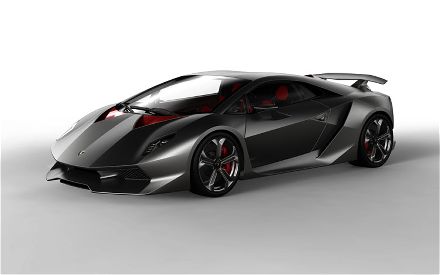
Lamborghini Sesto Elemento Concept


At the 2012 Paris Show, Lamborghini unveiled the Sesto Elemento, the conceptual forerunner to the second-generation Murcielago. Made of carbon-fiber-reinforced plastics (CFRP) virtually from bottom to top, the Sesto Elemento (for "sixth element," because carbon is number six in the periodic table) is said to weigh "under 1000 kilos" (2200 pounds)-and thus it undercuts the 1000-kg mark set by Ferrari with its own lightweight supercar concept, the 2007 Millechili, said to preview the next-generation Enzo. As for Lamborghini's striking two-seater, it uses the chassis and the running gear of the Gallardo Superleggera. It thus is more compact and less extreme than next year's Murcielago replacement, which remains faithful to the big-bore twelve-cylinder engine. 


Says Stephan Winkelmann, CEO and president of Lamborghini: "At Lamborghini, we consider carbon-fiber to be the key for advanced lightweight engineering. That's why we have -- in close cooperation with Boeing and the University of Washington in Seattle -- established in Sant'Agata a carbon fiber competence center." Like every Lamboghini since the Countach, the black beast with the featherweight body is an attention-grabber par excellence. Shaped in-house by the team under Filippo Perini, the sexiest element to come out of Sant'Agata for a long time looks like a crossbreed between a Mattel micro-racer and Darth Vader's next company car. "Ever since the Reventon, we have honed our new form language, which is now chunky, angular, aggressive, purposeful and unmistakably Lamborghini," says Manfred Fitzgerald, the man in charge of brand & design. 

"Sesto Elemente is notably smaller than the Murcielago, but its stance and the proportions are totally in line with the uncompromising tonality of a contemporary mid-engine supercar. While black is the logical color for a carbon-fiber styling exercise, various contrasting red accents add an extra dash of sportiness. After all, this is not a fashion item but a proper street racer. Proving the point are the massive brake cooling ducts, the XXL air intakes and the ground effect properties of the rear apron, the rear undertray, and the prominent rear aerofoil." 

2013 Infiniti JX35 - Eastbound and Down


It's unusual for Automobile Magazine's New York contingent -- Jamie Kitman and me -- to get first crack at a long-term car, but that's exactly what happened with our new, Four Seasons 2013 Infiniti JX35. It paused in Ann Arbor just long enough for art director Matt Tierney to snap a few pictures before road test editor Chris Nelson hopped in to rendezvous with me, exchanging the JX for the Four Seasons Mazda CX-5. Most of the staff in Ann Arbor didn't even get a look at it before it left.

At the agreed-upon location in western Pennsylvania, we did the hand-off. Coming out of the Mazda, my first impression was that the JX felt much bigger behind the wheel than I expected. It almost seems to belong to the Chevy Tahoe/Ford Expedition class of vehicles rather than the Chevy Traverse/Ford Explorer family of big utes. It has the same sense of solidity (door close, gear shift action, steering weight) as the QX56. In fact, the JX overall seems very much a sibling of the QX, which I suppose is what Infiniti was trying for.
Given this vehicle's size, the impossibility of seeing much of anything out the back, and the difficulty in locating the edges of the wavy bodywork, the overhead-view camera is a real helper in judging the faraway edges of the body. It's a necessary supplement to the back-up camera. In fact, it would be preferable if it continued to work once you shift into Drive, at least until 5 mph or so.


This JX is equipped with the full phalanx of electronic helpers, which we tried out on the five-hour interstate drive back to New York. Some proved more useful than others. I was happy with the performance of the adaptive cruise control, which I was able to use on the busy but fast-moving interstates in eastern Pennsylvania and New Jersey. With the spacing set to the shortest distance, the JX was able to maintain a reasonable space. The system isn't too aggressive when slowing for the cars ahead, and it is quick to resume the set speed when traffic clears. The pre-collision braking, on the other hand, can't cope with crawling along in traffic on suburban boulevards. It wants to slam on the brakes even as you slowly creep up to the car ahead. I had to switch it off. The lane departure warning also got switched off after a while. Its beeping proved to be a lot more annoying than the vibrating steering wheel or vibrating seat that other automakers use.

This is the first-ever Infiniti to use a CVT, and I can't say that this is a watershed moment for the brand. At least it doesn't call much attention to itself except when accelerating, and those moments are usually pretty brief. However, at one point on the drive home I was on a hilly secondary road, and the CVT had a hard time choosing a ratio in moderate, low-speed acceleration up a gentle grade. It kept switching back and forth, like an indecisive automatic. Strange. So far, I haven't seen that behavior again in the hilly terrain where I live. Granted, the shiftless transmission probably helps fuel economy, which is pretty OK. I got an indicated 23 mpg on my drive home from Pennsylvania. A couple days of trundling around town dragged the average down only slightly, to 22 mpg. The EPA estimates are 18 mpg city and 23 mpg highway.


After a couple of weeks, my family and I took the JX on another road trip, this time to the Adirondacks. In a mix of highway and rural two-lanes, it got an indicated 24 mpg overall. Most of the time, Nissan's ubiquitous 3.5-liter V-6, here making 265 hp, feels perfectly adequate lugging the JX's 4419 pounds. But in the short passing zones on the two-lane roads in the mountains, it labored, and I did wish for more power. We also had another moment when the CVT exhibited the same indecisiveness; once again, we were gently accelerating up a grade, but at a slightly higher speed, of 55 to 60 mph. It will be interesting to see whether other drivers encounter this behavior.

Speaking of other drivers, I turned over the big Infiniti to Jamie Kitman. Soon, we'll take it back to Ann Arbor, where it's sure to be eagerly awaited.

You will be redirected to the script in

seconds